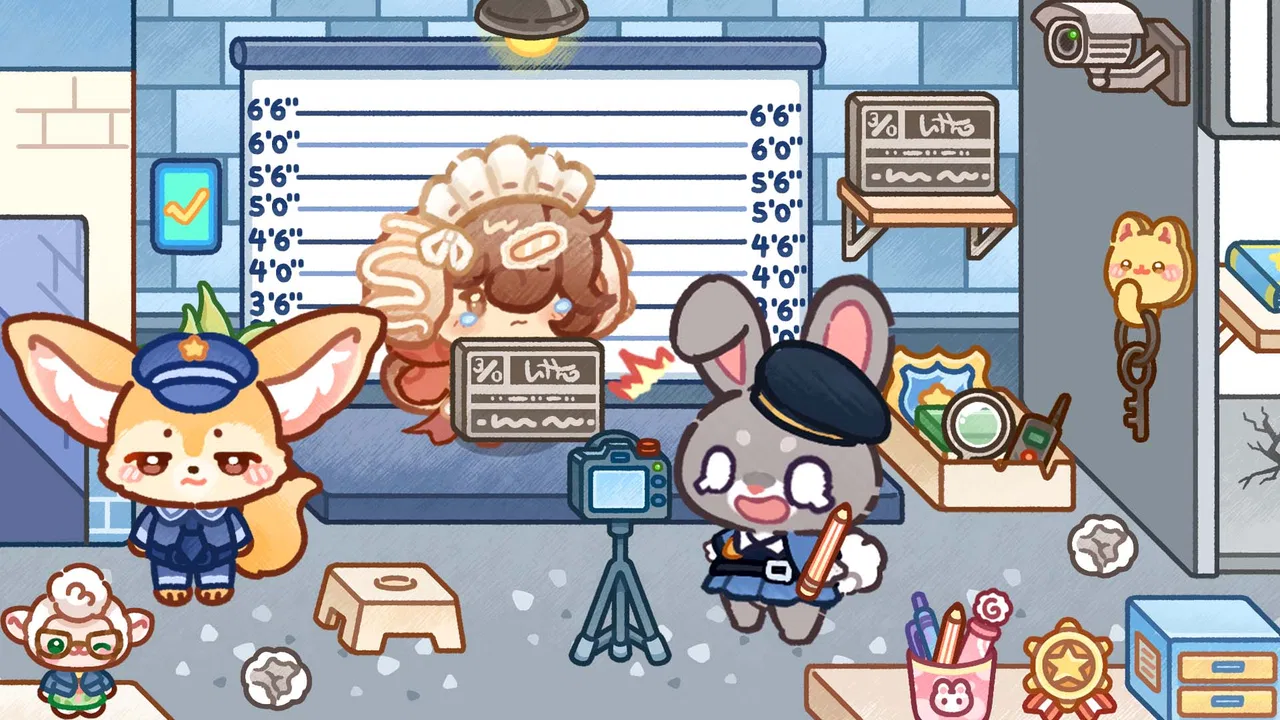
Lovely Cat World : Avatar Life
- 4.6
- Rating
- 10.00M
- Installs
- Free
- Price

 Analysis by App-foxy
I spent time with Lovely Cat World: Avatar Life to see whether its gentle cat-themed world offers more than a cute first impression. My answer is yes, although it depends heavily on what you want from an educational game. This is a relaxed creative experience from Kitten Doll HK, built around decorating a personal cat world rather than chasing difficult objectives or competing with other players. I found it easiest to enjoy in short, quiet sessions, especially when I wanted something more playful than a traditional learning app and less demanding than a full simulation game.
The game is free to start and is suitable for Everyone, which makes it approachable for children and families. It runs on Android devices using version 6.0 or later, and the current version is 4.9. The project first appeared on June 7, 2024, so it is still a relatively young title, but its audience has already grown to over five million installs. Its average score sits at 4.6 from around twenty-four thousand ratings, with roughly one thousand three hundred written reviews. Those figures suggest that the soft presentation and simple creative loop are connecting with a broad audience, though they do not remove the need to look closely at how the game actually fits into daily use.
How the cat world feels in everyday play
I find the game’s appeal easiest to judge by looking at what a relaxed session actually asks of the player: make a few choices, shape a personal cat-themed space, and decide when it feels finished for now. That kind of loose routine can make creative play feel welcoming rather than aimless, especially when I set one small intention before starting. The next section looks at how a few sensible settings and boundaries can support that routine.
You May Also Like

 Blood Strike: 2.5 Anniversary
Blood Strike’s Loadouts Turn Every Drop Into a Tactical Gamble
A close look at Blood Strike’s custom loadouts: how fast access to signature weapons reshapes its battle royale rhythm, rewards preparation, and narrows the gap between fights.

 Pandora - Music & Podcasts
Pandora’s Music Is Easy to Start, but Harder to Recover
Pandora’s strength is its low-effort path from a seed to a station. Its weak spot is how much confidence it asks you to place in connection, setup, and quiet recovery.

 8 Ball Pool
 Is Built on Rivalries, Rematches, and Routine
A close look at the rivalries, rematches, shared routines, and unanswered safety questions that turn a quick pool match into a persistent mobile community.

 Samsung Music
’s Quiet Strength Is Playing What You Already Own
Its reach comes less from spectacle than from dependable access to a personal library. That simplicity is both the app’s strongest retention engine and its ceiling.

 AccuWeather: Weather Radar
AccuWeather Review: A Quick, Clear Forecast for Everyday Decisions
For everyday plans, the best forecast is the one you can understand quickly. AccuWeather makes rain timing, radar, and local conditions easy to act on, with a few trade-offs.

 Hill Climb Racing
Why Hill Climb Racing Still Turns Crashes Into One More Run
A tiny car, a bumpy hill and one more upgrade: Hill Climb Racing keeps resurfacing because its simple chaos makes every near-miss feel personal.
More From Our News Desk



A calm creative space rather than a conventional lesson
The educational label needs a little context. I would not approach this as a replacement for a reading tutor, a mathematics app, or a structured classroom exercise. Its learning value comes more indirectly through choosing, arranging, observing, and making decisions inside a playful environment. The player gets a space to shape and personalize, with cats and avatar-life elements providing the setting for that activity.
That distinction matters. A child expecting quizzes, progress tests, or clearly separated lessons may find the experience too open-ended. On the other hand, a young player who learns best by experimenting can get more from it than from an app that constantly asks for correct answers. I enjoyed the freedom to spend time on small choices without feeling pushed toward a timer or a score. The game works particularly well as a low-pressure creative break.
For me, the strongest appeal is the combination of a friendly theme and manageable interaction. The cats give the world an immediate personality, while the avatar-life format encourages the player to think about spaces, appearance, and routines. Even when the activity is simple, it creates opportunities to practice preference, sequencing, and visual organization. Those are modest benefits, but they are more realistic than claiming that the game teaches a complete academic subject.
Who will get the most from it
I would recommend it first to children who like decorating, character customization, and gentle pretend play. It can also suit parents looking for a shared activity where an adult can ask questions such as why a child chose a certain arrangement or what they would change next. Those conversations add an educational layer that the game itself does not need to announce loudly.
It is also a reasonable choice for someone who wants a soft, noncompetitive mobile game. The cat setting makes it easy to return to after school, during a quiet afternoon, or before a screen-time session ends. Because the experience is not built around intense reflexes, it is more accessible to players who dislike fast action or complex controls.
I would skip it if your priority is deep strategy, a long narrative, detailed simulation, or measurable academic progress. Players who need a firm goal structure may feel that the creative freedom lacks direction. Likewise, anyone searching for a completely purchase-free experience should remember that optional in-app items range from $0.99 to $11.99 each. The game is free, but that does not mean every desirable addition is included without extra spending.
A realistic family use case
Imagine a child finishing homework and asking for a game before dinner. Instead of handing over a competitive title that can quickly become frustrating, a parent could open this one for a short decorating session. The child might decide how to organize the cat world, explain the choices, and then stop at a natural point. If the adult participates by asking the child to plan the next change before making it, the session becomes a small exercise in planning and communication rather than passive tapping.
That scenario also shows the game’s limitation. It does not automatically turn screen time into guided learning. The value depends on how the player uses the creative space. A child playing alone may simply enjoy the visuals, which is perfectly valid, but parents should not assume that the educational category guarantees a lesson-based experience.
What feels thoughtfully designed
The most useful way to play is to treat each session as a small project. Rather than trying to change everything at once, I found it better to choose one goal, such as improving the look of a particular area or deciding on a consistent style for an avatar. This approach makes the open-ended format feel less vague and gives younger players a simple way to practice planning.
Another helpful habit is to let the player explain a choice before immediately changing it. In a cat-themed world, even a small decision can become a prompt for storytelling: who lives there, what the space is for, or what should happen next. This is one of the less obvious strengths of the game. The app provides the setting, but the player supplies much of the meaning.
I also think the game works better when adults avoid turning every action into a teaching moment. The charm comes from freedom, and too much correction can make a relaxed creative activity feel like homework. A good balance is to ask occasional questions, then let the child make the final decision.
How the current version changes the experience
The current version, 4.9, is important because it shows that the game has moved beyond its initial release and is being maintained as an active product. I would still separate that fact from assumptions about what every update contains. A version number alone does not prove a particular feature, but it does give existing players a practical reason to keep the app updated: they are using the latest available build rather than judging the game only by its launch state.
For a newer player, that evolution is mostly invisible. You simply encounter the current form of the game and decide whether its creative loop suits you. For someone who started earlier, the main question is whether returning feels worthwhile. In my view, the answer depends less on dramatic transformation and more on whether you enjoy continuing to refine a personal space. This is not the kind of title I would choose for constant novelty; I would choose it for a familiar, comforting activity that can remain pleasant over time.
The release date also helps frame expectations. Since the game arrived on June 7, 2024, it does not have the long-established identity of older avatar-life franchises. That can be positive because the experience feels current, but it also means long-term players may reasonably watch for continued polish, broader variety, and improvements that make returning users feel considered.
Where it differs from familiar alternatives
Compared with a standard educational app, this game is less formal and more imaginative. A conventional learning tool usually tells you what skill to practice and gives you a visible result. Lovely Cat World: Avatar Life instead gives you a themed environment and lets you decide what to do with it. That makes it weaker for parents who want clear curriculum alignment, but stronger for children who resist direct instruction.
Compared with a typical dress-up game, the cat-world setting adds more context than simply changing an outfit and moving on. The avatar and surroundings work together, so choices can feel connected to a broader personal space. The trade-off is that players who want a huge wardrobe or highly detailed customization may find a focused cat theme narrower than a general-purpose fashion app.
Compared with a life simulator, it is easier to approach and less intimidating. You do not need to learn a complicated set of systems before enjoying the central idea. The downside is that players seeking realistic schedules, intricate resource management, or a deep social world may outgrow it quickly. I see it as a gentle creative toy with educational value, not as a full virtual-life replacement.
Small frictions that affect the decision
The open-ended structure can be both the game’s best quality and its biggest weakness. When I wanted a quick, soothing activity, the lack of pressure helped. When I wanted a strong sense of progress, it made the session feel less purposeful. This is why I would introduce it as a creative space, not promise a sequence of increasingly difficult challenges.
The free-to-start model also deserves attention in a family setting. Optional purchases between $0.99 and $11.99 per item can be reasonable for players who want to personalize further, but children may not always distinguish between something available in the base game and something that costs extra. I recommend setting expectations before handing over the device and using the platform’s purchase controls where appropriate. That is not a criticism unique to this title; it is simply part of using a free mobile game responsibly.
Another trade-off is focus. The cute cat presentation is a real strength for players who already like that style, but it may not appeal to someone who prefers realistic characters or a more serious educational tone. The game does not need to please everyone, and its narrow theme is part of its identity. Still, it is worth knowing before installing it.
Questions I would consider before installing
If you are wondering whether it is genuinely free to try, yes: the listed price is free, while optional in-app purchases are available. I would install it without paying first and decide only after seeing whether the basic creative loop holds attention. That approach is especially sensible for families, because the appeal depends on personal taste more than on a fixed lesson plan.
If you are asking whether it is appropriate for young children, its Everyone content rating makes it broadly accessible. Even so, age suitability and supervision are not identical. Younger players may need help understanding purchases, navigating menus, and stopping after a planned amount of time. An adult joining the first session can also show the child how to use the game as a creative activity rather than simply tapping through it.
If device compatibility is a concern, the Android requirement is version 6.0 or later. That covers many older devices, although real-world comfort can still depend on the phone or tablet itself. I would use a larger screen when possible because decorating and viewing a personal world are more enjoyable when the interface does not feel cramped.
If you already played an earlier build and are deciding whether to return, the current version is 4.9. I would update before making that judgment, then give it a few sessions rather than expecting one dramatic change to redefine the game. Existing users who enjoy collecting, arranging, and revisiting their space have the clearest reason to come back. Those who left because they wanted a more structured game may not find that a version update changes the basic identity.
What I would like to see next
For future development, I would watch how Kitten Doll HK supports long-term creativity without making the experience feel crowded. The best additions would be ones that give returning players fresh reasons to plan and personalize while preserving the calm tone. More depth is not automatically better if it introduces pressure or makes the game harder for younger players to understand.
I would also pay attention to how clearly optional purchases are presented. A family-friendly creative game benefits from simple communication around what is included and what requires spending. Clear boundaries help parents, while predictable design helps children focus on the cat world instead of the shop.
Finally, I would look for signs that the educational identity becomes more meaningful through play rather than through forced quizzes. The game already has a useful foundation in visual choices, storytelling, and personal organization. Building on those strengths would be more convincing than adding unrelated lesson screens that interrupt the atmosphere.
My recommendation after using it
Lovely Cat World: Avatar Life is worth trying if you want a free, gentle cat-themed game that encourages creative decisions and imaginative play. I especially recommend it for children who enjoy decorating and avatars, parents seeking a calm shared activity, and adults who want a low-pressure alternative to competitive mobile games. The 4.6 average from around twenty-four thousand ratings and more than five million installs show that it has found a substantial audience, but my recommendation comes from how clearly its central idea works in practice.
I would not choose it as a primary educational tool, a deep simulator, or a game for someone who needs constant challenge. Its strongest moments come from giving the player room to make a world feel personal, and its weakest moments come when that freedom lacks a clear next step. If you understand that trade-off, the game becomes easier to judge fairly.
My final advice is to start with a small creative goal, play alongside a child at least once if the app is for family use, and decide about purchases only after the free experience has earned your interest. For the right player, this is a charming little space to return to; for everyone else, its gentle pace and focused theme may feel too limited.
FAQs for Lovely Cat World : Avatar Life
01What is Lovely Cat World: Avatar Life?
Lovely Cat World: Avatar Life is a simulation game that allows players to create and customize their own cat avatars. Players can explore various environments, complete quests, and interact with other players' avatars. The game emphasizes creativity and social interaction, making it a fun and engaging experience for cat lovers.
02Is Lovely Cat World: Avatar Life free to play?
Yes, Lovely Cat World: Avatar Life is free to download and play. However, it includes optional in-app purchases that allow players to buy virtual items, such as accessories and outfits for their cat avatars. While these purchases can enhance the gaming experience, they are not necessary to enjoy the core features of the game.
03What platforms is the game available on?
Lovely Cat World: Avatar Life is available for both Android and iOS devices. Players can download the game from Google Play Store for Android or the Apple App Store for iOS. Ensure your device meets the minimum system requirements for a smooth gaming experience.
04Does the game require an internet connection?
Yes, Lovely Cat World: Avatar Life requires a stable internet connection to play. This allows for real-time interaction with other players' avatars and access to online features such as leaderboards and events. Offline play is not supported, so ensure you have a reliable internet connection before starting the game.
05How does the game handle data privacy?
Lovely Cat World: Avatar Life takes data privacy seriously. The game collects some personal information to provide a personalized experience, but it adheres to strict privacy policies to protect user data. Players are encouraged to review the privacy policy before playing to understand what data is collected and how it is used.
Pros
- Cute and engaging graphics.
- Easy-to-learn gameplay mechanics.
- Wide variety of cat avatars.
- Regular updates with new content.
- Interactive and social features.
Cons
- In-app purchases can be costly.
- Occasional ads interrupt gameplay.
- Requires a stable internet connection.
- Limited customization options.
- Some features locked behind paywalls.

Lovely Cat World : Avatar Life
Gallery